(Our 100th edition)
Upcoming Volunteer Trips
We have these volunteer trips coming up, all travelling by water taxi from Okahu Bay:
Sunday March 16th (endangered plants – full)
Saturday March 22nd (weeding, track clearing)
Thursday March 27th (weeding, track clearing)
Wednesday April 9th (weeding, track clearing)
You can book on any of these trips by registering here:
https://motuihetrust.my.site.com/volunteer/s/weekend-volunteer
or email operations@motuihe.org.nz
We have these midweek volunteer trips coming up, travelling by Dreamweaver from Pier Z:
Tuesday March 18th (TBC)
Friday March 28th
If you are interested in joining any of these trips, please email Simon on volunteermotuihe@gmail.com
Kind Donation from Lou and Iris Fisher Charitable Trust
We are very grateful to receive a kind donation from the Lou and Iris Fisher Charitable Trust, to support our project to re-establish fluttering shearwaters, petrels on the island. This donation will be spent over the next 2 years and will contribute to equipment and transportation costs.
If you’d like to be involved in the seabird project, please contact operations@motuihe.org.nz.
Free Courses Available
Auckland Council is funding several training days for volunteers
First Aid – Monday 10th March (New Lynn) & Friday 21st March (Three Kings)
Growsafe – Friday 4th April (Te Atatu) & Saturday 5th April (Onepoto)
If anyone would like to be registered on any of these courses, please get in touch.

Stuart led the weeders to continue the war against mothplants, these are flowering at this time of year so easy to spot. And if we kill the vines before the pods develop it’s an added bonus, so we don’t need to collect the pods over winter. Lois and Jackie cleared tracks to keep our access to all parts of the island open. With the trees we’ve planted rapidly growing this is an ongoing task. And our dotterel monitors carried out their final survey. The dotterel chicks have now all fledged after a successful breeding season – last year there were no recorded chicks surviving, so this is a testament to the care and attention from our dotterel team.
Our penguin team continued their mahi to set up a monitoring programme for our resident population. One last moulting penguin was seen in a burrow, the rest of our kororā have left and won’t return until the beginning of the next breeding season. Over winter we’ll install some additional nesting boxes and carry out maintenance in the current locations. (Jill)
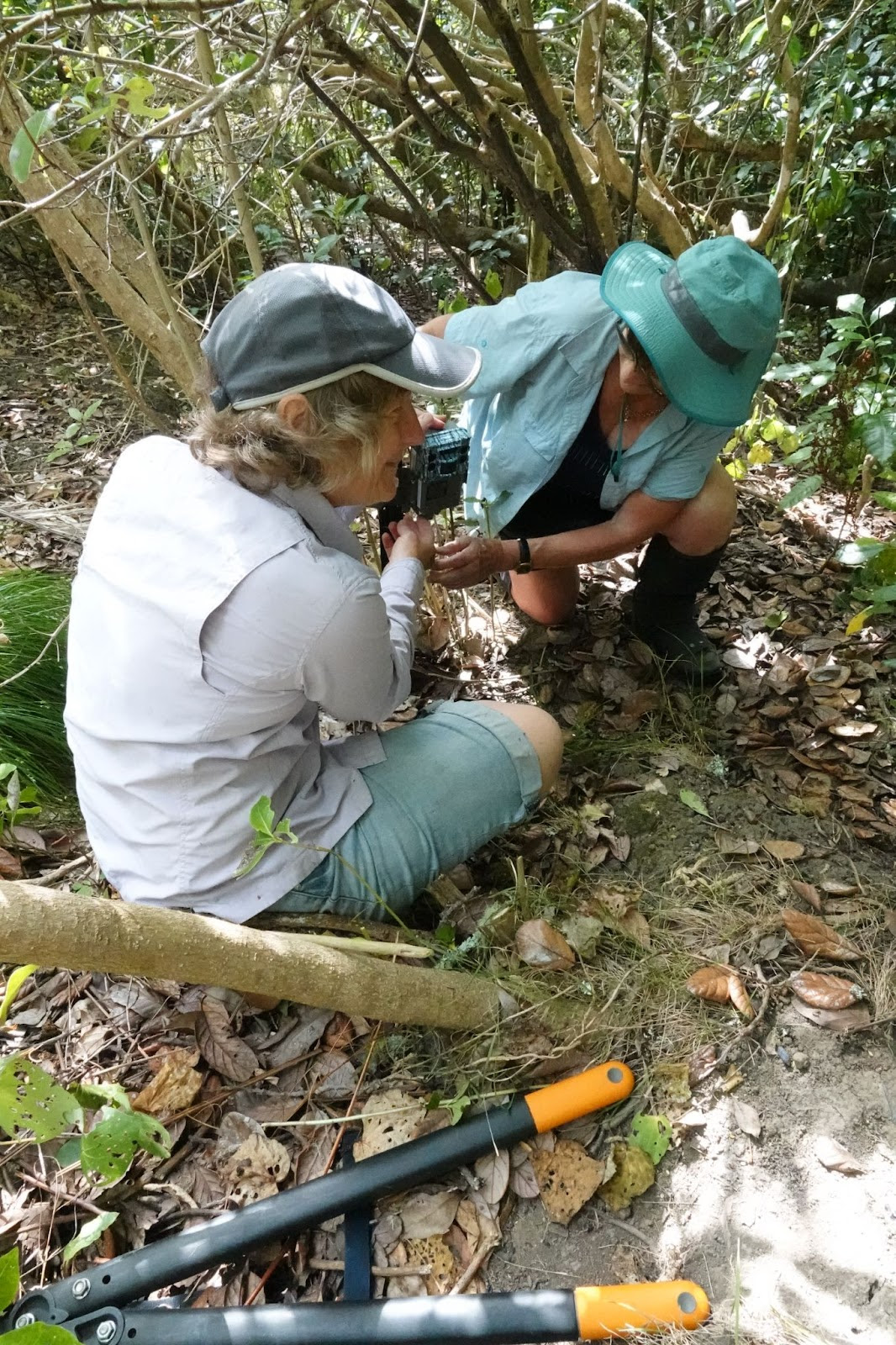
Photo: Mounting a camera to monitor activity at one of our tuatara burrows (Lois Badham)
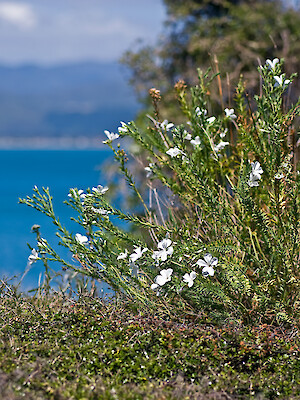
Photo: Linum Monogynum (Jeremy R. Rolfe)
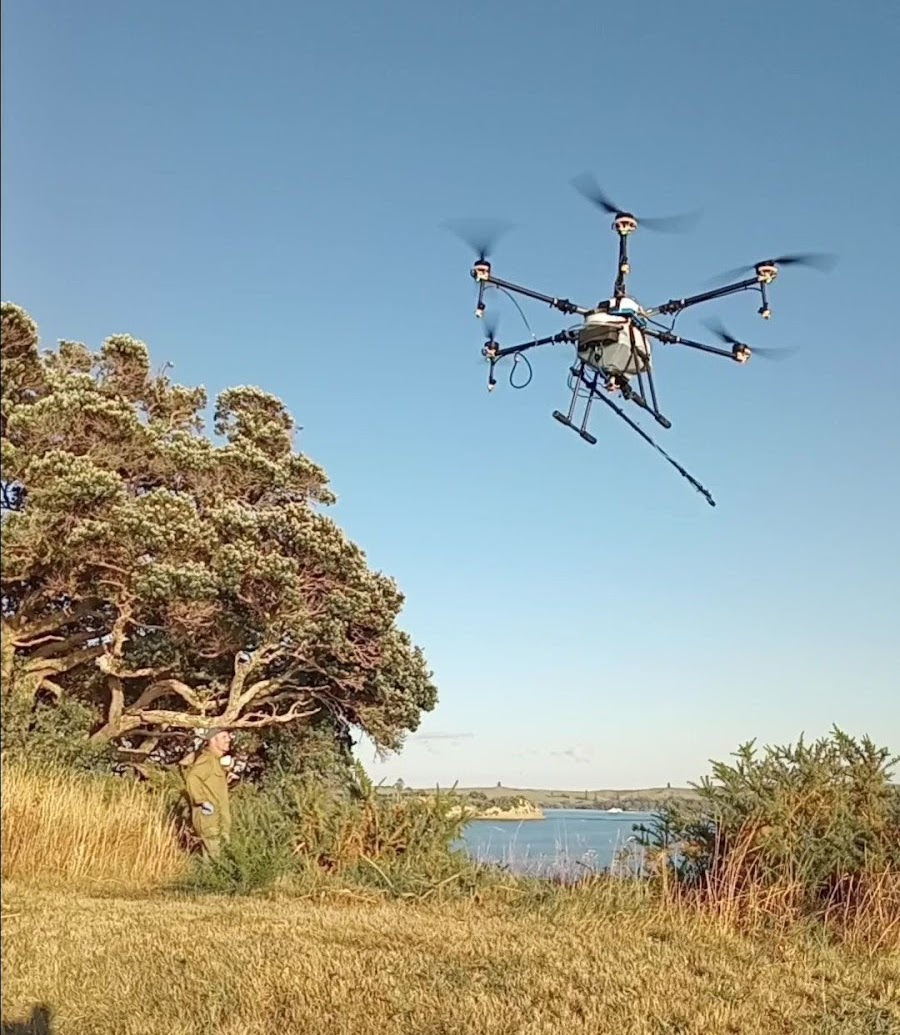
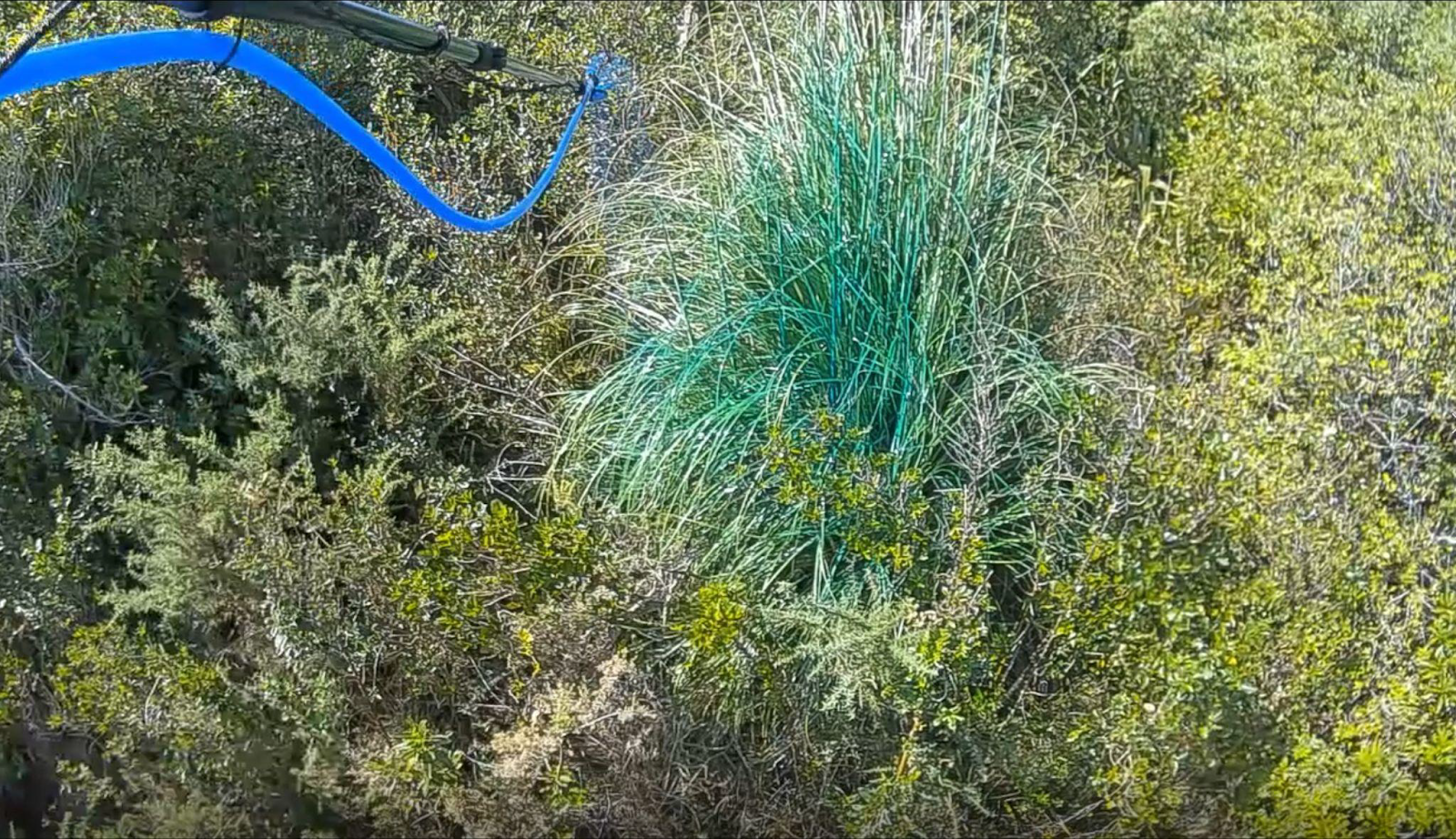
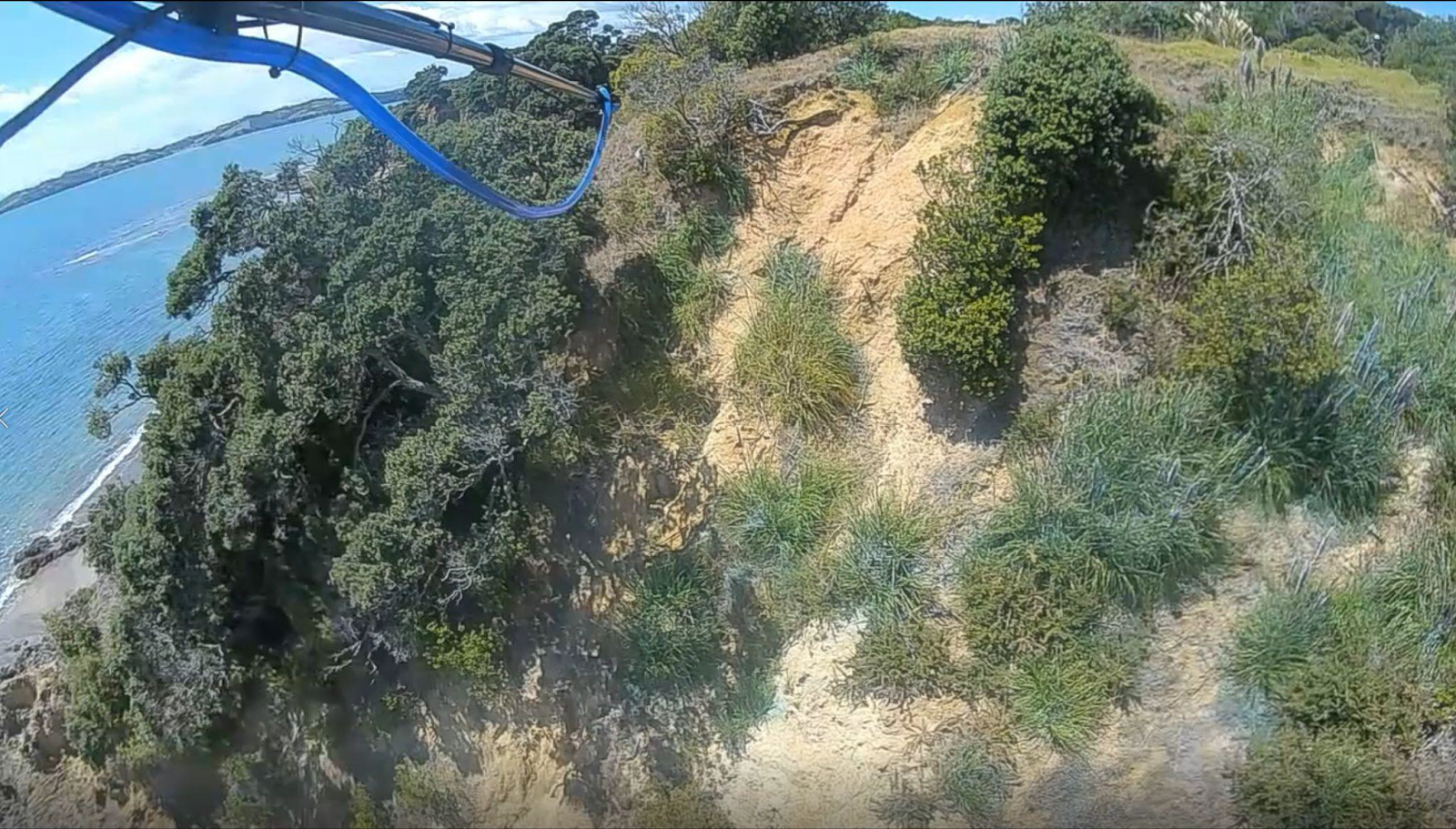
As part of this work, we worked with Geoff and Jeremy from Island Solutions to trial drone spraying of the pampas that is starting to invade our difficult-to-reach cliff faces. An early morning start saw us leave Okahu Bay in the dark, on what turned out to be a perfect day for the trial – very light winds and clear skies. Geoff and Jeremy skilfully manoevered the spray drone into places impossible to access any other way, and provided a good wallop of spray into the pampas plants around Pa Point, Billy Goat Point and the cliffs beyond Calypso. Using a spray which is only effective on grasses, and a nozzle which dispenses large droplets to reduce wind spray, the drone was able to effectively target pampas at the same time limiting the effects on native plants growing in the vicinity.


Group photo for part of the ANZ & ASB Volunteer teams
More kōwhai ngutu-kākā (kakabeak) seed was scarified and sown. Scarification involves cutting a very small chip out of the outer shell of the seed (the ‘seed coat’), which allows water to penetrate into the seed activating germination. Scarification of kōwhai ngutu-kākā,seeds is fiddly work as the seeds are only 1-1.5 mm long. Though tedious, this treatment is worthwhile as germination after scarification is rapid, occurring within a few weeks rather than months if the seed coat were to be left to naturally degrade.
Native broom (Carmichaelia australis) and mingimingi (Leucopogon fasiculatus) were also sown in the nursery. Both of these species are typical components of the cliff scrub that crowns the tops of many less-modified cliffs on the Hauraki Gulf Islands. This cliff scrub was likely once the favoured haunt of kōwhai ngutu-kākā, and thus native broom and mingimingi will be used as companion plants for that species on Motuihe.
The last seeds to be sown on the day were of koheriki (Scandia rosifolia). About 200 koheriki were planted across Motuihe last year, and they have grown very well in most places. The seeds sown this month were collected last month from the Inner Gulf island’s only known wild population, and will contribute to the genetic diversity of the new population on Motuihe. (Ben)

Photo: Scandia rosifolia in flower (Lois Badham)
Track Report:
The track clearing team of ASB & Avanti Finance completed around 200m yesterday.. Paradise Valley track (northern side of Von luckners) is now done and the team started down the southern side of Von Luckners. We’re trying to train the manuka trees to make a couple of tunnels there which will be great to walk through.
Nursery:
Jill B organised a team which saved 600 Karaka. A number of smaller tasks were completed for a very satisfactory day.
Weeding:
Stuart took the tractor, and weeding gear, to the ‘drop down’ track. The team, in HOT conditions, fought their way into the bush which yielded plenty of woolies, moth (2 bags of pods collected) and the odd Rhamnus. Another sobering example of the Sisyphean task we face.
Everyone clearly enjoyed the island, Jill B organised a Tieke track walk and a swim was not, as is often the case optional, but obligatory. Hot work in the bush! Lovely glide home with everyone back at pier Z safe and sound. (Simon)
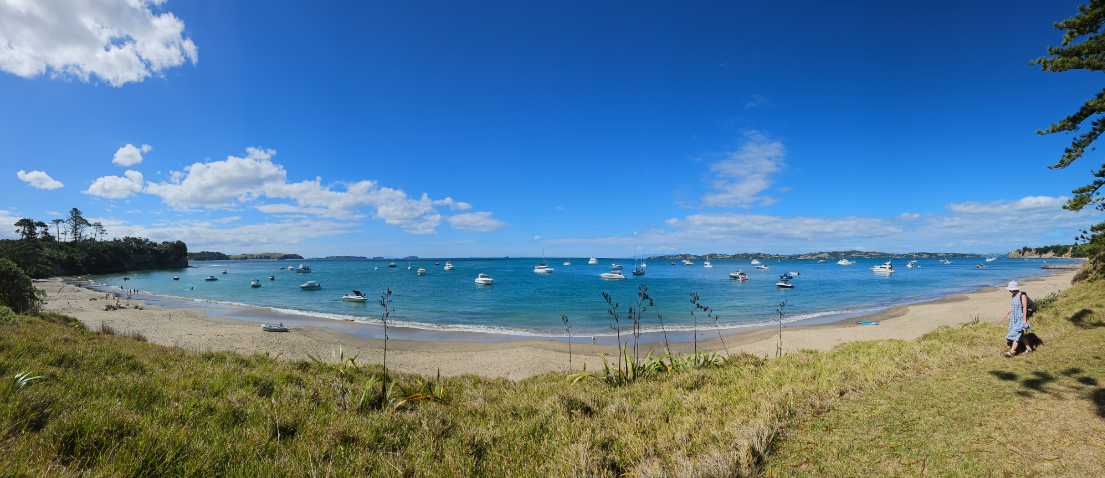
Photo: View from the beach (Pierre Hermann)
Phil LaR and Ian led a team of weeders to above Ohinerau to continue the ongoing battles against mothplant and tobacco weed. Unfortunately pods are starting to form already on some of the mothplant vines, earlier than usual. Jill S led an enthusiastic team in the nursery to prick out spinifex and pingao seedlings. There are so many benefits of re-establishing these plants along our beaches, not least the stabilisation of the sand dunes and offering protection to our dotterel chicks from the ever-present gulls.
Some of our penguin team visited burrows for the final check of the season. Expecting that all of our birds would have moulted and left to go fishing, the team were surprised to see one last korora in its burrow, fully moulted and ready to head off in its new plummage. There will be some new nest boxes established in remote places over the winter.
A big call out to Fiona, who spent the day looking after the many activities she takes care of for the Project – restocking first aid kits, woolshed maintenance and supply, painting the rails on the new deck, checking the water at the pond, and heritage tasks on the headland. It highlights the huge range of tasks that are associated with our project, and also how lucky we are to have such dedicated volunteers to make sure things run smoothly. (Jill)

Mary and Joe completed the last of our dotterel surveys for the season. Surprisingly they noted 9 birds remaining on our beaches – we had expected them to all have left by now. (Jill)