Wildlife
From a largely pastoral island with 20% of remnant bush, and overrun by pest weeds and rabbits in 2000, Motuihe has now become a rich bush reserve, with increasing biodiversity of birds, insects and reptiles.
Planting of native trees and plants since 2003 has seen most of the island regenerate into bush species similar to what is thought to have been present before island farming. As food sources have developed and the island has been kept pest free, we have been able to translocate several species of birds to the island, including kiwi, saddlebacks, kakariki, bell birds and whiteheads. Many of these birds can be seen or heard on a walk around the island. Campers or overnight boaties will often hear kiwi calls at night. Bushnell cameras have recorded some fascinating moments between some of these newer arrivals.
Translocations of reptiles such as geckos, skinks and tuatara have also been successful.
To continue increasing the biodiversity of the island, it is essential to continue to manage weed infestations, and keep the island free of all animals and insect pests. As you walk around, you may see tracking tunnels which are checked regularly for signs of pest footprints. Dogs are prohibited on Motuihe as they are a threat to many native birds and reptiles, including kiwi.
Native Birds
In NZ, many native birds nest on, or close to the ground which allows cats, dogs, stoats, rats and mice to prey on eggs and juvenile birds. With the eradication of these mammal pests from Motuihe, and the extensive tree planting on the island which has increased the natural food sources for native birds, several endangered bird species have been reintroduced, and are thriving.
NZ Wood Pigeon — Kererū
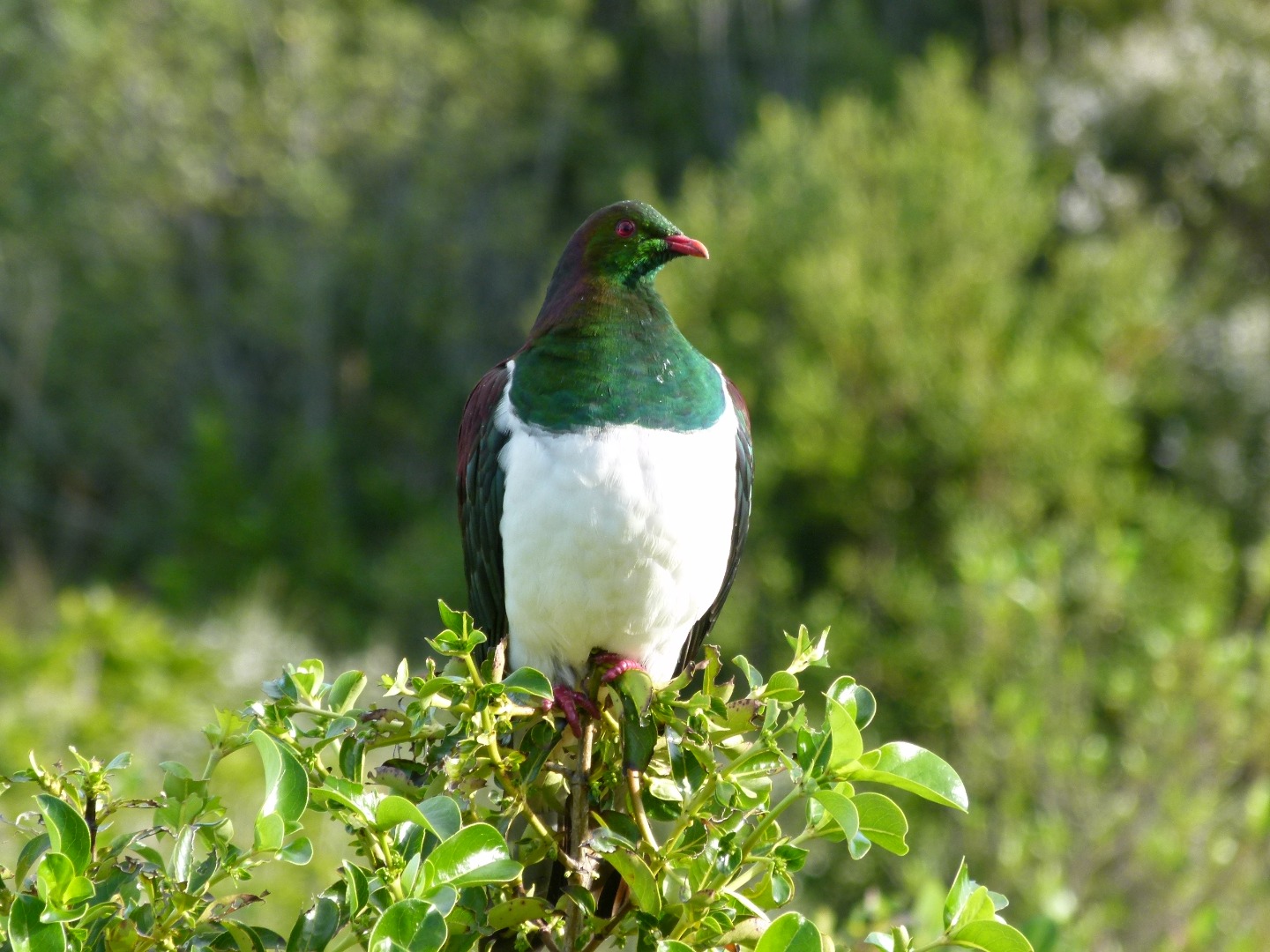
Existing small population are now thriving, and frequent the older bush with larger trees. The kererū are big enough birds to swallow large fruit, such as those of karaka, miro, tawa and taraire and disperse the seed over long distances. They will also browse on leaves and buds. Their wings make a very distinctive “whooshing” sound as they fly. They nest in trees, laying a single egg in a flimsy nest constructed of a few twigs thrown together.
North Island Saddleback — Tīeke
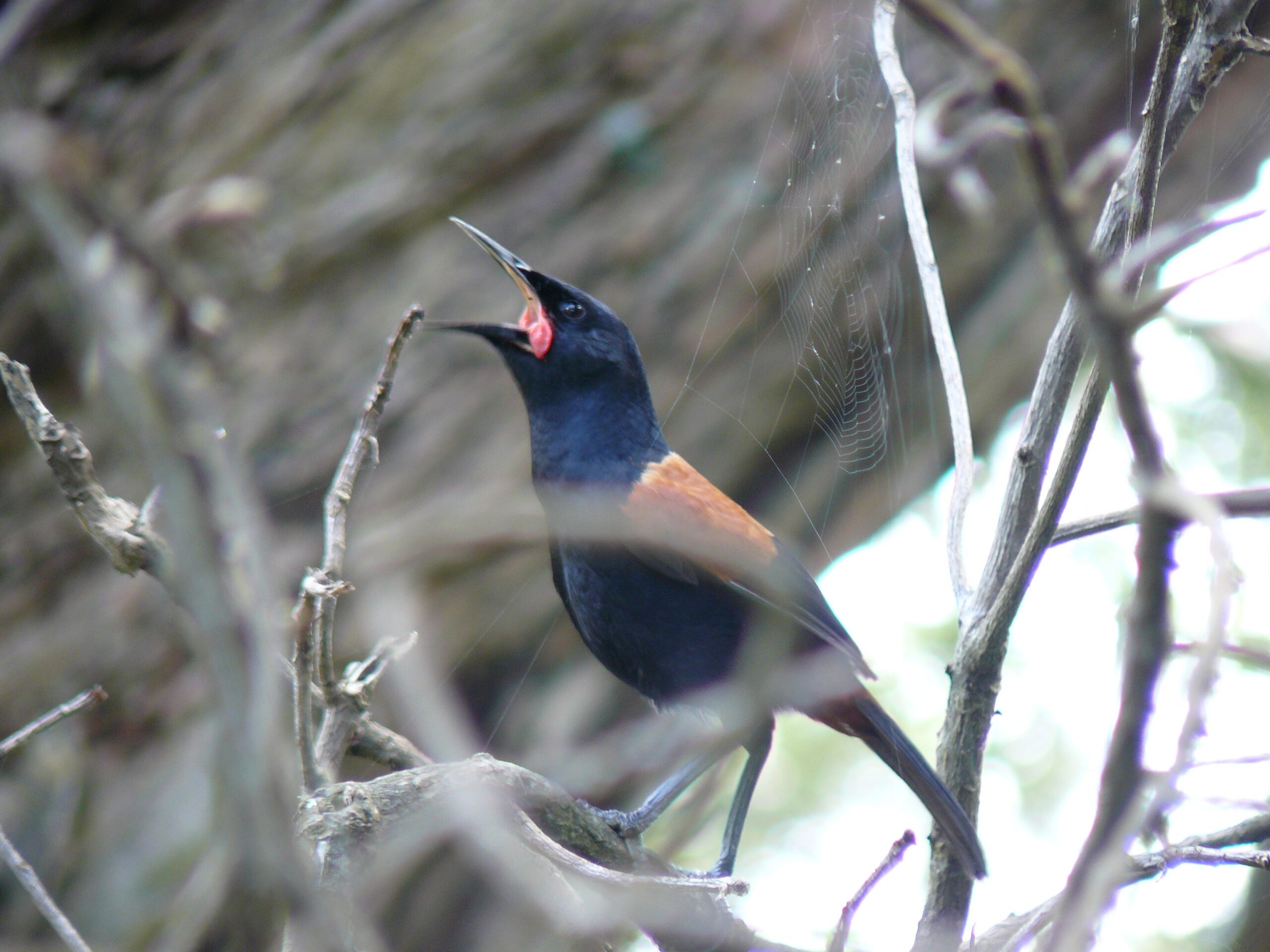
Are not normally found around Auckland. 20 were translocated in 2005 from Tiritiri Matangi, and tieke are now commonly seen and heard across the island. Their loud ts-ts-ts-ts sound is a call warning other birds of your presence. Glossy black plumage with a chestnut saddle and red wattles. They nest in tree cavities, rock crevices and in dense ground level vegetation. Artificial nest boxes were used initially after release on Motuihe but rarely used by Tieke. Food source is invertebrates, fruits and nectar.
Red Crowned Parakeet — Kākāriki
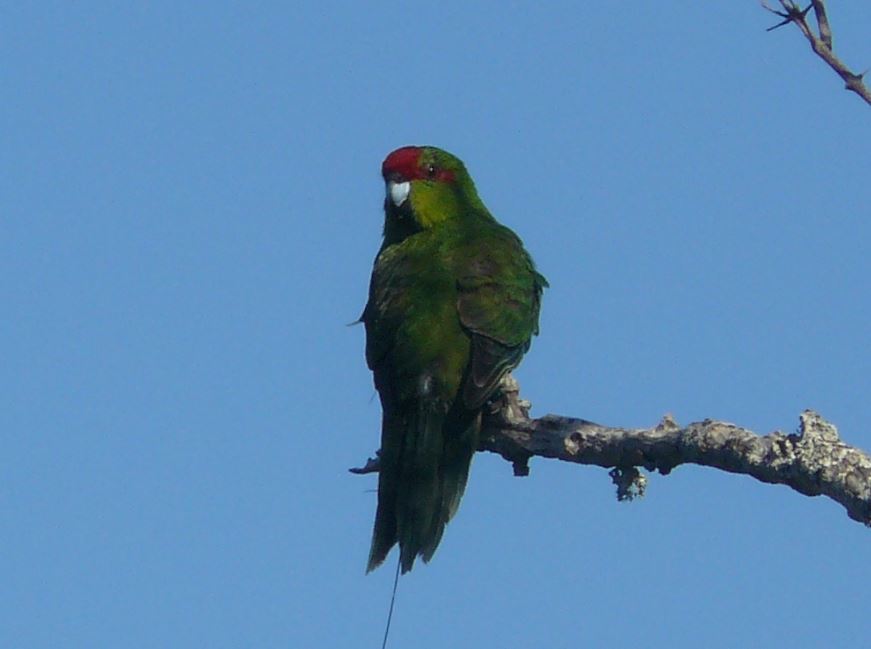
Red crowned or red fronted parakeet — Kakariki are a small parrot with green plumage with red markings on its head. 30 were translocated from Little Barrier Island (Hauturu) in 2008, and can now be seen daily swooping through the older bush on the Tieke track and their chattering can be heard as they fly across the island. Kakariki are known to breed year round and feed on a variety of food items.
Bellbirds — Korimako
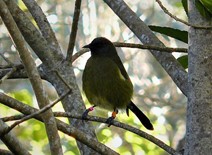
50 were translocated from Tawharanui and Tiritiri Matangi in 2010. Are a little harder to see as they live within the forest areas and blend in with the native bush colours. Are now increasing in numbers on Motuihe each year. Their bell-like song is sometimes confused with that of the tui. Breeding occurs from September to January. Like Tui and Stitchbirds, Bellbirds are a nectar loving bird but will also feed on fruit and insects. They have a curved bill and a long tongue which is used to reach into flowers and drink nectar.
Little Spotted Kiwi — Kiwi Pukupuku
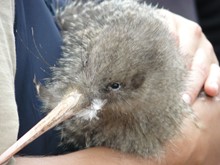
NZ’s smallest kiwi. 40 were translocated from Kapiti island in 2009 and 2010. Bushnell camera footage has shown unbanded birds so breeding has been successful. A monitoring programme is run by Motuihe volunteers each year to plot kiwi calls at night to help in the estimation of current numbers and spread of our little spotted kiwi. Food source is grubs and other small insects along with sandhoppers. As their eyesight is very poor they depend on their sense of smell, long beak and claws to find food.
Acknowledgement and appreciation to Air New Zealand for transporting our 40 Little Spotted Kiwi from Kapiti Island at no cost to the Trust.
Whitehead — Pōpokotea
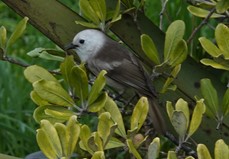
40 were translocated from Little Barrier Island (Hauturu). This bird species fly in flocks in the canopy of the forest. The diet of whiteheads is primarily insects although they may supplement with the fruit off mahoe and mapou. Whitehead build their nests above ground between 1 and 15 metres.
Morepork — Ruru
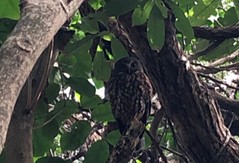
Existing small population on Motuihe. Their haunting call may be heard in Orchard Bush from dusk and throughout the night. Morepork are nocturnal and will hunt for invertebrates, beetles, weta, moths and spiders. They have been known to catch small birds, rats and mice. Speckled brown with big yellow eyes, a short tail, acute hearing, sensitive to light and can turn their head 270 degrees. Females are larger than males. By day they roost in tree cavities or in thick foliage. Birds such as Saddleback will send out warning calls to their partners if a Morepork is in the vicinity.
Spotless Crake — Pūweto
An at risk NZ native bird which has recently self-introduced itself to Motuihe Island. Its Conservation Status is classified as ‘Declining’. Small water birds approx 20cm in size. Very dark general appearance, with dark brown plumage on the upper parts and dark bluish grey beneath. These birds have been sighted on Motuihe monitoring cameras over the last 2 years and heard more frequently recently in the southern part of the island. They seldom venture far from the cover of vegetation during daylight. Their diet consists of seeds, fruit and leaves of aquatic plants, and a wide variety of invertebrates including worms, snails, spiders, beetles and other insects.
Banded Rail — Moho Pererū
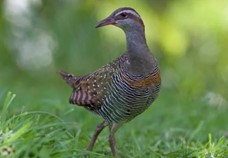
An at risk NZ native bird which has recently self-introduced itself to Motuihe Island. Its Conservation Status is classified as ‘Declining’. They are usually quite shy but may become very tame and bold in some circumstances. Habitat clearance and drainage have had a significant impact on banded rails. Banded rail are a potential indicator of wetland health because they are dependent on the presence of high quality and ecologically diverse habitats and rich food supplies.
For more photos and bird calls, visit DOC’s bird guide.
Reptiles and Invertebrates
Since 2009, a number of native gecko and skink translocations to Motuihe Island have taken place. Moko and copper skinks already have an existing population on the island. As the bush regenerates develops, the populations and spread of these will increase.
Shore Skinks (Oligosoma smithi)
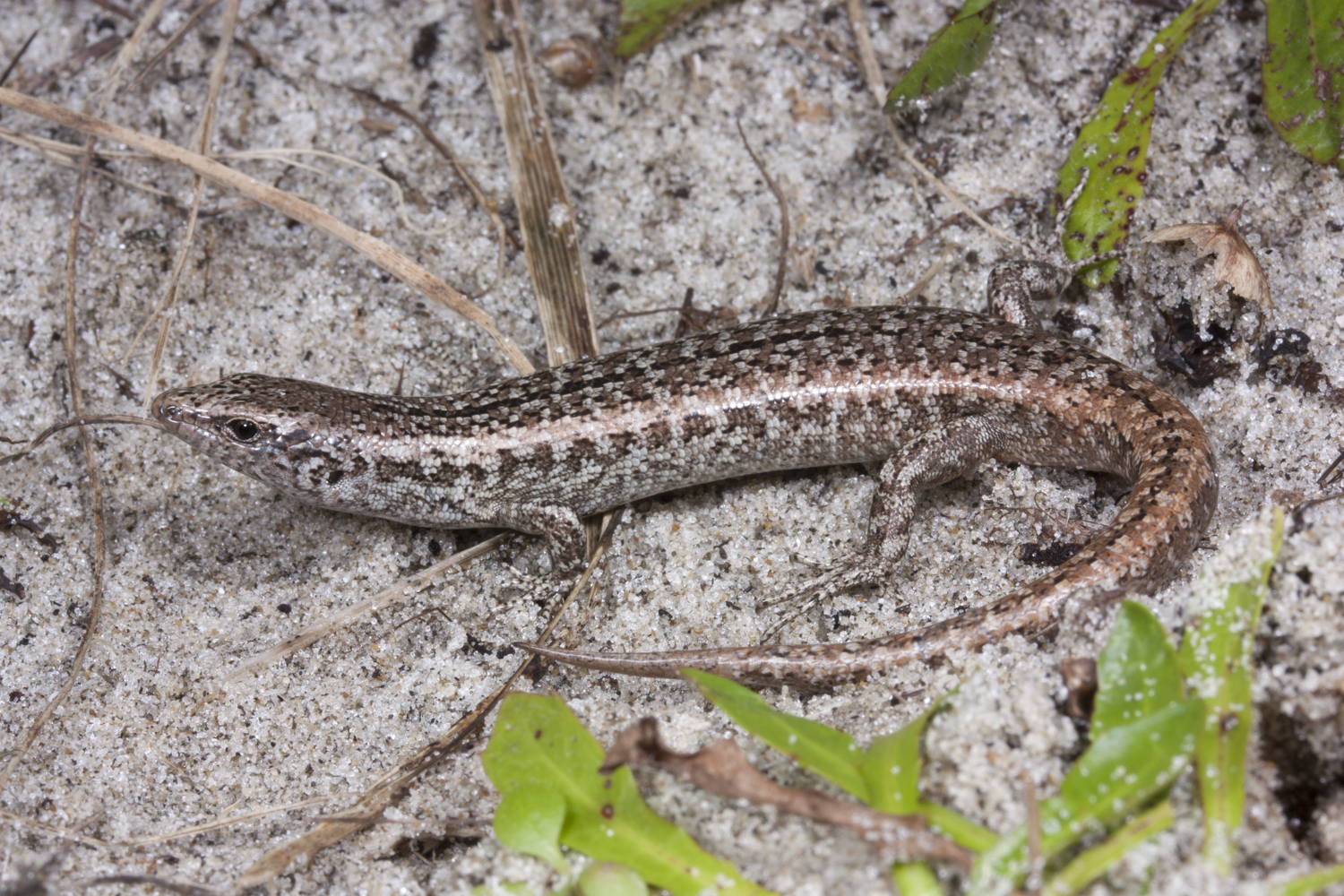
69 were translocated from Tawharanui Peninsular in 2009. They live in sand dunes, often found around or under driftwood at high tide and other debris and active during the day. They feed on sand hoppers or small insects found around the shoreline. Skinks are characterised by a smooth shiny skin with overlapping scales, narrow head, smooth narrow toes and small round pupils with movable lids. They shed skin in pieces rather than whole. Rather than laying eggs, gravid females give birth to live young.
Tuatara (Sphenodon punctatus)
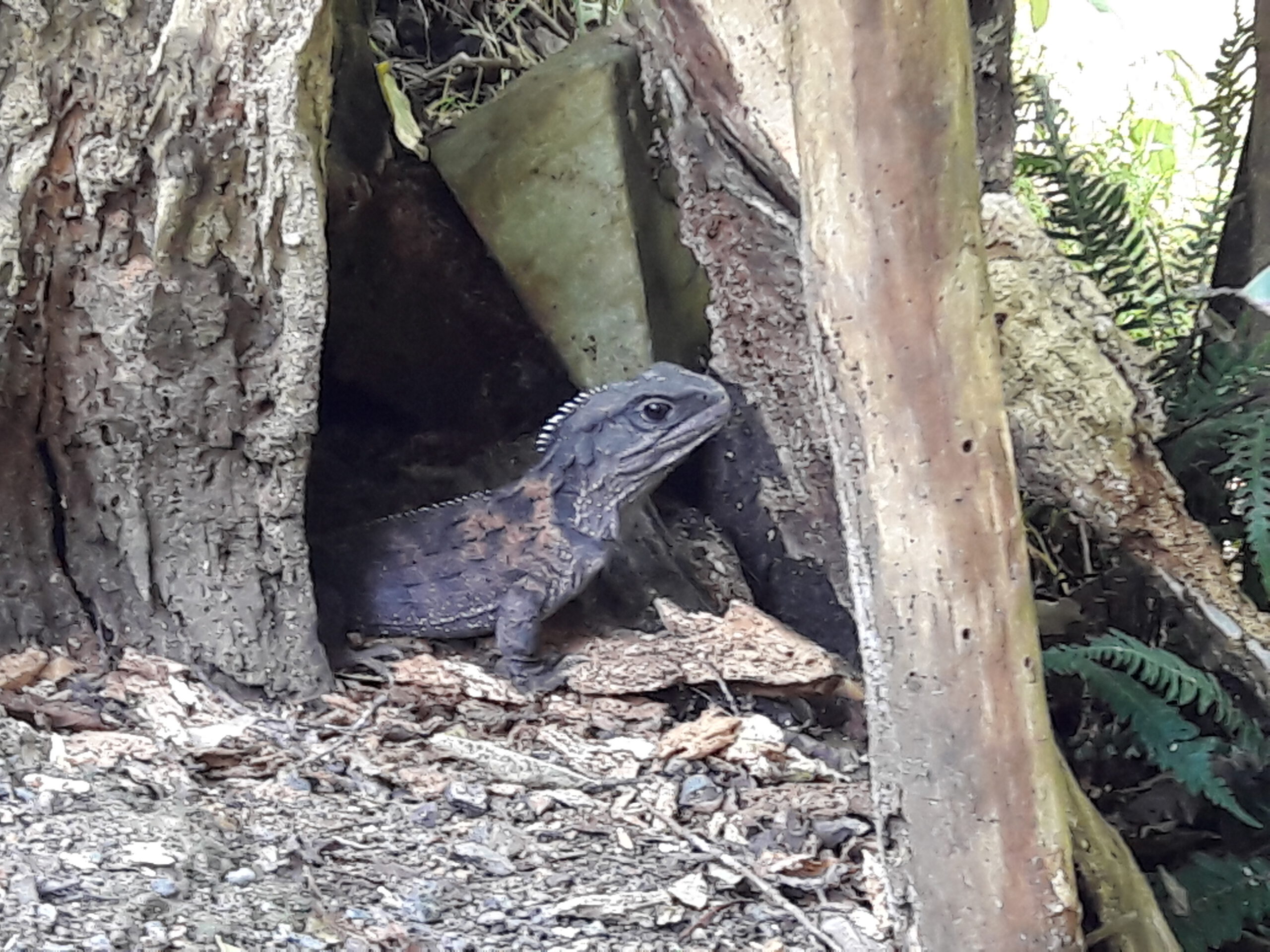
60 were translocated from Lady Alice Island, Northland in 2012. Rare, medium-sized reptiles found only in New Zealand. They are the last survivors of an order of reptiles that thrived in the age of the dinosaurs. Their diet mainly consists of invertebrates such as beetles, weta, worms, millipedes and spiders. They come in a variety of colours from olive green, charcoal to reddish brown. They shed their skin annually.
Common Gecko — Raukawa Gecko (Woodworthia maculata)
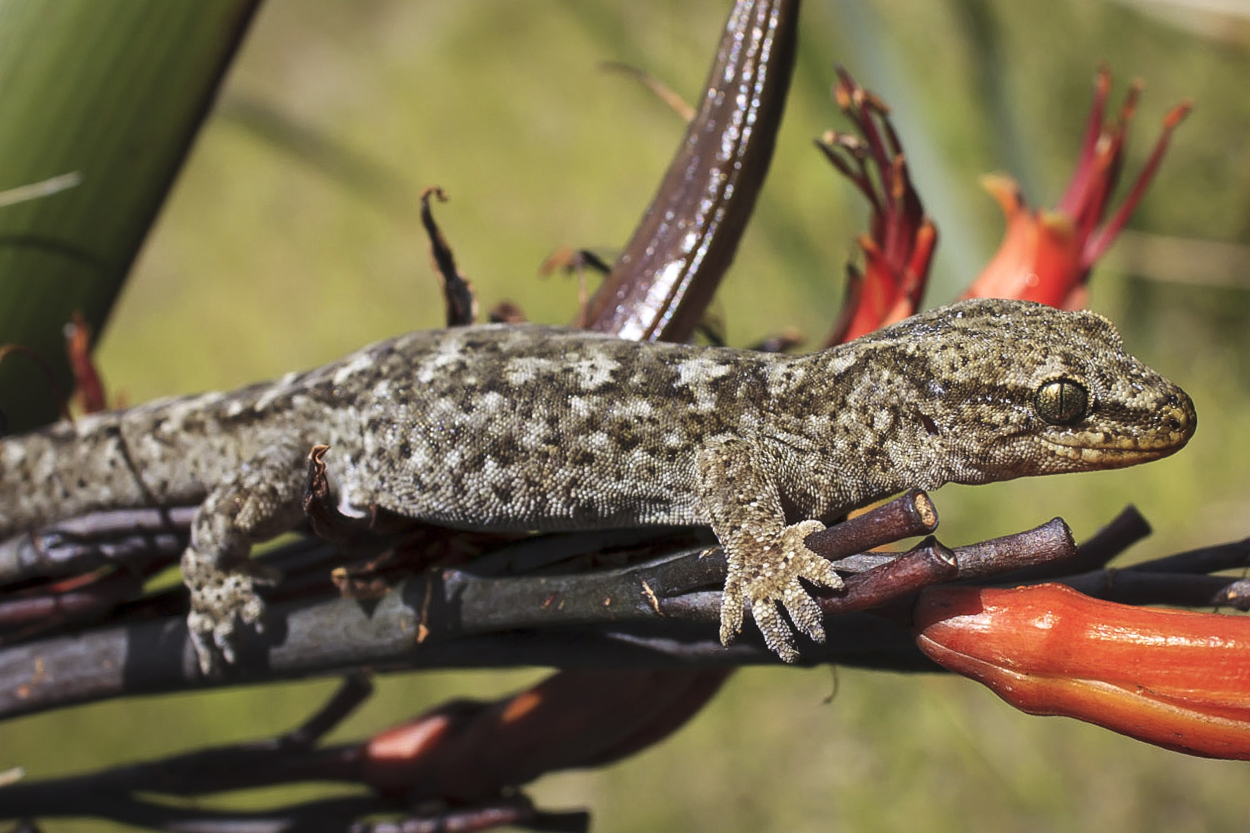
60 were translocated from Otata Island, part of the Noises Islands in Auckland’s Hauraki Gulf in 2013. Grey or brown colour, often with variable markings that may involve bands, stripes, blotches or chevrons. Rostral scale on tip of snout does contact nostrils. Toes have greatly expanded toe pads. Nocturnal, semi-arboreal. Inhabits forest, scrub, grassland and beaches. Forages near the high-tide line. Often found in rock crevices and under rocks on boulder beaches.
Pacific Gecko (Dactylocnemis pacificus)
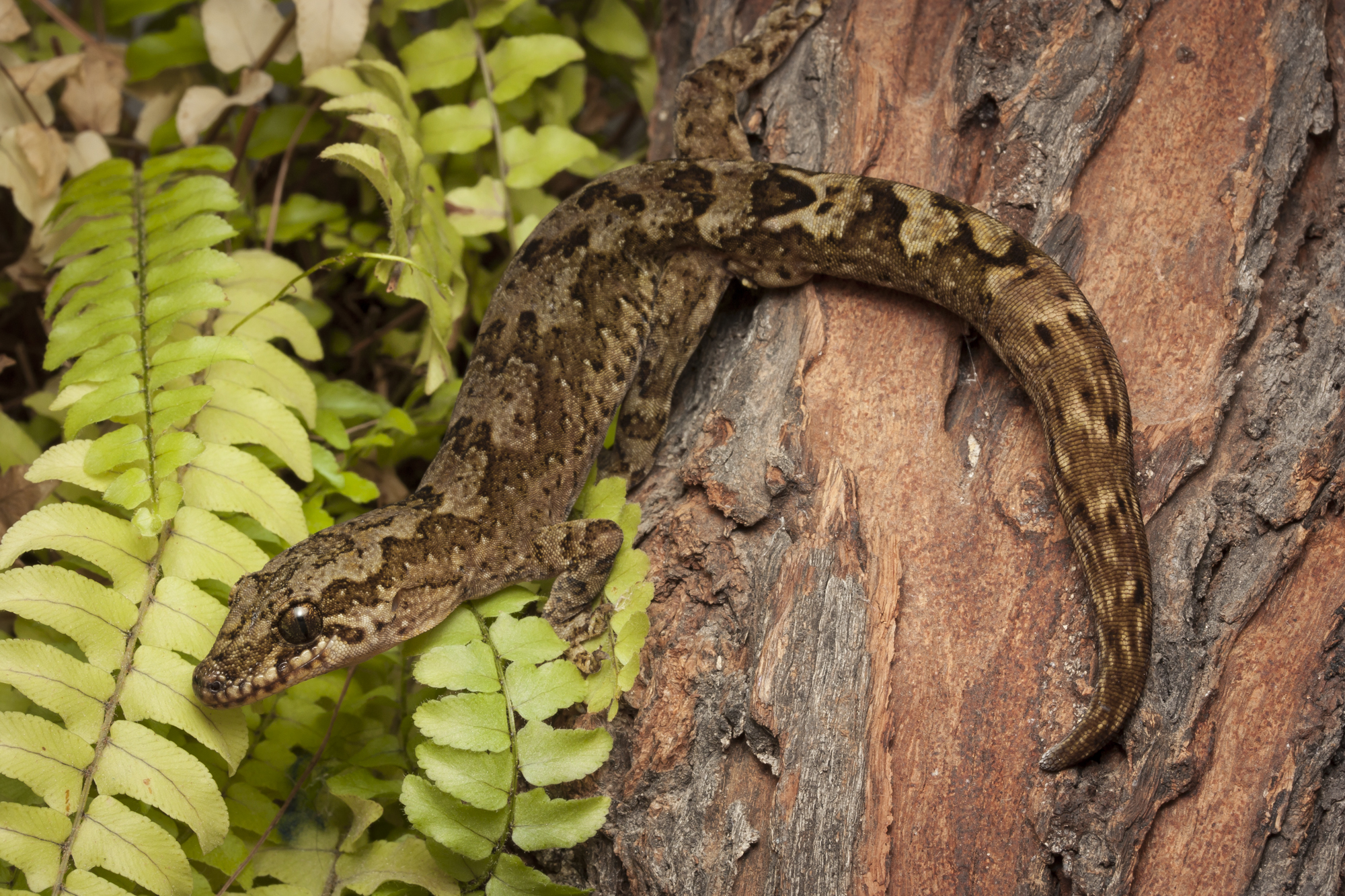
114 were translocated from Tarahiki Island (Shag Island) in Auckland’s Hauraki Gulf in 2014. Grey or brown colour with variable markings that may involve bands, stripes, blotches or chevrons. Markings often bright and distinctive. Occasionally have mustard-yellow patch across nape. Rostral scale on tip of snout in broad contact with nostril. Expanded toe pads with long claw. Nocturnal. Inhabits forest, scrub (kanuka), grassland and rocky coastlines.
Duvaucel Gecko (Hoplodactylus duvaucelii)
100 were translocated from Stanley Island (Mercury Islands) off the Coromandel Peninsular in 2014. Large robust gecko; mainly grey with olive-green or dark brown blotches. Large green or brown eyes. Lower surface uniform or speckled. Toes have expanded toe pads with long claw. Nocturnal, semi-arboreal. Lives in forest and scrub vegetation. Often found in rock crevices and close to the shoreline. Forages in trees and on the ground. May bite when handled.
Little Barrier Giant Wētā — Wētāpunga (Deinacrida heteracantha)
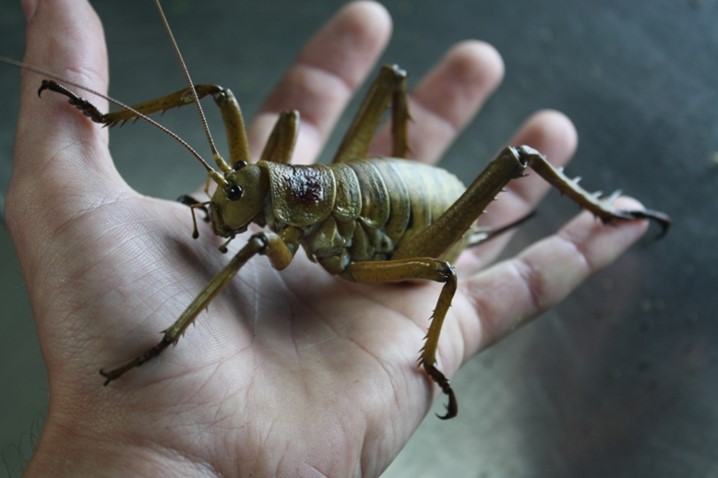
Approximately 1500 are scheduled to be translocated to Motuihe Island mid to late 2020. These have been bred by Auckland Zoo staff. Survived only at Little Barrier initially and endemic to New Zealand. Female wetapunga are larger than males and can reach a weight of 35 grams. Moulting is necessary for them to grow in size and can take up to 11 moults before maturity. It can take up to two years for them to become adults. They commence breeding 1-2 months after maturity. Females will lay eggs throughout adult life, generally producing 100-300 eggs. Large flightless weta feed mainly at night. They feed on fresh leaves and prefer native plants with large leaves such as karaka, karamu, māmāngi, māhoe, and kohekohe.
Wetapunga Release 2 December 2020
Translocations
The following table summarises species translocations to Motuihe (as at June 2023).
| Year | Taxa | Number released | Habitat requirements | Outcome |
|---|---|---|---|---|
| 2005 | North Island Saddleback — Tīeke (At Risk) | 25 | Forest/shrubland | Established, population increasing, genetic top-up desirable |
| 2008 | Red crowned parakeet — Kākāriki (At Risk) | 35 | Forest, shrublands and grasslands | Established, breeding confirmed, population increasing |
| 2009 | Shore skink — Oligosoma smithi (Not threatened) | 60 | Coastal dunelands | Established, breeding and range expansion confirmed, population expected to be increasing |
| 2009/2010 | Little spotted kiwi — kiwi pukupuku (Nationally endangered) | 14 + 26 | Forest and shrublands and rank grassland | Established — breeding confirmed, population increasing |
| 2010 | North Island bellbird — Korimako (Not threatened) | 50 | Forest and shrublands | Failed but individuals present and likely to re-establish from Motutapu/Rangitoto/Rakino populations |
| 2012 | Tuatara — Sphenodon punctatus (At Risk) | 60 | Coastal forest and shrublands | Population increasing, dispersing over the island, breeding successful |
| 2012 | Whitehead — Pōpokotea (Not threatened) | 40 | Forest and shrubland and cliff habitats | Established, breeding confirmed, population increasing |
| 2013 | Common gecko — Raukawa Gecko (Not threatened) | 60 | Coastal forest and shrubland and cliff habitats | Established, breeding confirmed, range expanded, population increasing, monitoring ongoing |
| 2014 | Duvaucel’s gecko — Hoplodactylus duvaucelii (At Risk) | 88 | Forest | Established, breeding confirmed, range expanded, population increasing, monitoring ongoing |
| 2014 | Pacific Gecko — Dactylocnemis pacificus (At Risk) | 54 | Coastal forest and shrubland | Evidence of breeding, limited expansion, probably population increasing |
| 2019–2024 | Wētāpunga — Deinacrida heteracantha (Vulnerable) | 339 young instars + 837 young instars + 71 adults + 56 adults + 70 mixed = 1373 total | Forest | Evidence established and limited expanding. Pilot monitoring. |
Restoration Planting
Planting of native trees and plants since 2003 has seen most of the island regenerate into bush species similar to what is thought to have been present before island farming. As food sources have developed and the island has been kept pest free, we have been able to translocate several species of birds to the island, including kiwi, saddlebacks, kakariki, bell birds and whiteheads.
To continue increasing the biodiversity of the island, it is essential to continue to manage weed infestations, and keep the island free of all animals and insect pests. As you walk around, you may see tracking tunnels which are checked regularly for signs of pest footprints. Dogs are prohibited on Motuihe as they are a threat to many native birds and reptiles, including kiwi.
Help protect these species
Biosecurity keeps the island predator-free. Check the rules before you visit.