
Farming and Kiosk Operators
From Campbell and Brown to the last stock removal in 2005
Farmers on Motuihe
Motuihe has been a farm from the time it was purchased by Campbell and Brown in 1843 right up until the stock was removed to make way for the restoration of the native bush in 2005.
Motuihe Farmers
| Names | Dates | Details |
|---|---|---|
| Mr Butler | 1837 | Mr Butler, probably from Sydney, appears to have negotiated with a group of Maori for the purchase of the island but this has never been officially recorded. On early maps the island is called Butlers Island. |
| William Fairburn | 5 Nov 1839 (owned island for 4 months) | Purchased the island from Maori. Did not farm. (Details of purchase on “Purchase from Maori” page.) |
| Henry Tayler | 21 March 1840 (owned island for 3.5 years) | Fairburn sold to Tayler for 200 pounds. Graham obtained a Crown Grant title to the island on 8 September 1843. |
| William Brown and John Logan Campbell | 13 Sept 1843 (owned island for 15 years) | Brown and Campbell bought from Henry Tayler for 220 pounds. First farmers. They also owned Browns Island (Motukorea). |
The farm appears to have been run by Maori workers under a farm manager J.W. Fedarb who was on the island from 1848 to 1852. Stockyards were built, fences went up, and a fowl house was constructed. They kept pigs and goats, grew a range of cereal and vegetable crops, and planted gorse and ngaio trees. They constructed a dwelling with a stone chimney and a well. A dwelling was moved from Browns Island to Motuihe — presumably the dwelling built for Brown and Campbell by the Ngati Tamatera people in 1840.
| Names | Dates | Details |
|---|---|---|
| John Graham | 1 Feb 1858 (owned island for 10 years) | Brown and Campbell sold to John Graham for 2,000 pounds. |
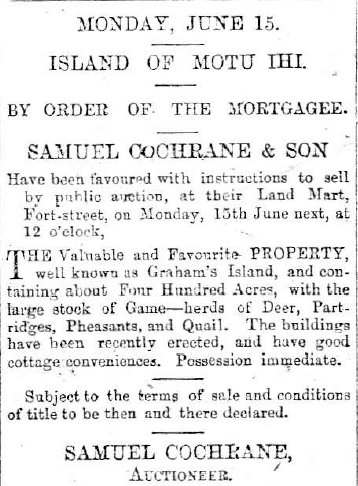
John Graham continued to run the island as a farm. In 1862 it is recorded that he employed 4 men on the island which was stocked with 25 horses, 36 cattle, 200 sheep plus pigs, turkeys and geese. By 1868 the island had been stocked with game including deer, partridges, pheasants and quail and new buildings erected. John Graham mortgaged the property in 1858, 1862 and 1863 for 3,000 pounds to Robert Graham, Superintendent of the province of Auckland. Graham drowned on his way to Motuihe on 7 May 1868. There was a mortgagee sale. The Auckland Free Press of Wednesday 3 June 1868 has it advertised for sale by public auction by order of the mortgagee, advertised with Samuel Cochrane and Son as the “well known Graham’s Island”.
Amy Haddock (her mother was the daughter of John Graham) who visited in her wheelchair with her family during a Motuihe reunion run by Ronnie Harrison, said she could remember the story told by her mother about standing on the headland looking out to sea with her mother who was holding her hand so tightly it hurt her. She knew later that they were looking out for her father who had not returned.
| Names | Dates | Details |
|---|---|---|
| Alex Alison and Thomas Duder | 1868 | After John Graham drowned the island was leased to these two men. |
| Quarantine Station | 1872 | The Government bought the island as a quarantine station. Remained in Government hands up until today. |
| 1879 | The first reference to plant cover on Motuihe appears to be by T Kirk in 1879. He wrote that Motuihe contains about 460 acres, more than half of which is pasturage. The open uncleared portion is chiefly covered with manuka or fern. | |
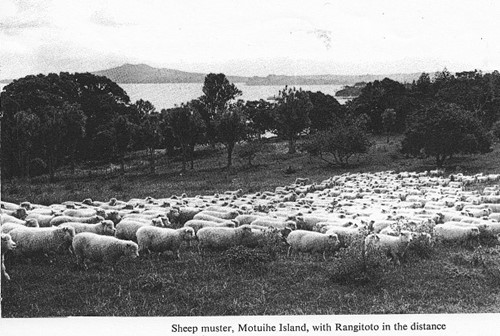
| 1928 | Control of the greater part of Motuihe was vested in the Auckland City Council. The council operated a sheep farm. | |
| Fred and Edna Hunt | 1939 | Before and during the war they managed the farm for the Auckland City Council. Jim and Alice Drew worked as farmhands. |
| Ray Ward | 1957 to 1960 | Eileen Slark remembers Ray helping her husband Tony, the last Naval surgeon on the island, prepare and cook BBQs. |
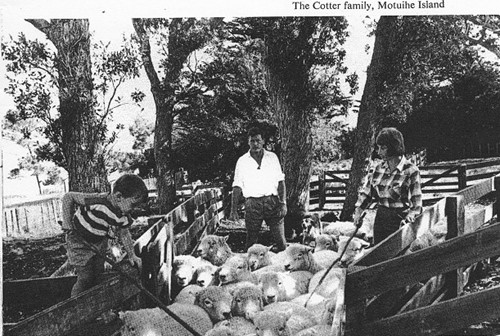
| Darrell and Barbara Cotter | 1961 to 1965 | The Cotters are featured in Shirley Maddock’s book Islands of the Gulf. |
| Names | Dates | Details |
|---|---|---|
| Bert and Becky Screen | 1965 to 1977 | Farming concession from Lands and Survey. |
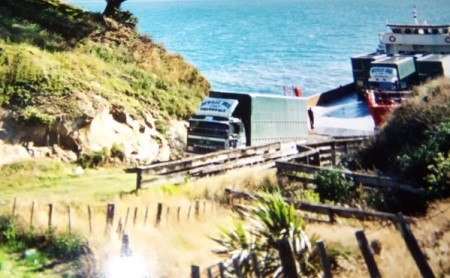
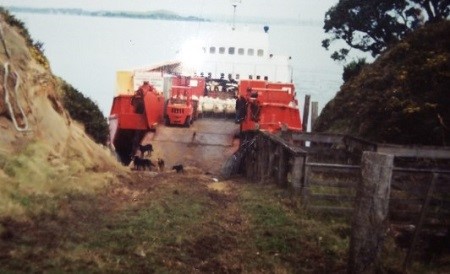
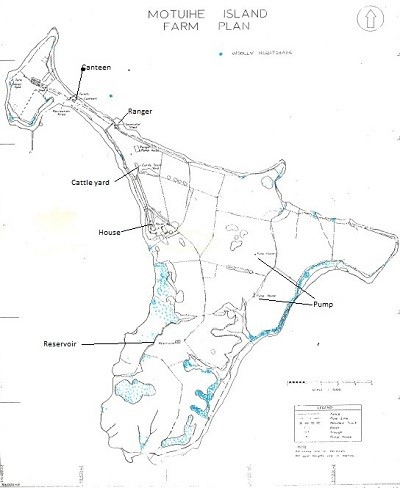
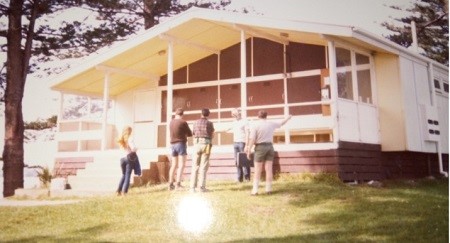
The farm was not in a good condition when Bert arrived but he worked hard to clear the weeds and build fences. They originally lived in the shearers’ quarters but later shifted into a Reidbuild house which was built for them. They had 3 sons and a daughter. They were taught by Becky until they went to secondary school and boarded in Auckland. The farm ran dry beef stock and sheep which were transported to the island by Subritsky’s ferries. Operations such as shearing, fencing and rabbiting were carried out by contractors who were housed in the shearers’ quarters. Water came via bores below the woolshed from a large aquifer underlying the island. The Navy had installed the bores, pumps and pipes. One electricity generator was by the house and the other by a gate. The Screens left in 1977 when Bert wearied of the constant demands on his time by visitors.
| Names | Dates | Details |
|---|---|---|
| John and Faye Allen | 1977 to 1990 | Farming concession from Lands and Survey. |
Took over the ranger’s responsibilities as well as running the farm from Frank Vanderson who was transferred to Motutapu. Assisted by Bruce Nelson the pest control officer who lived in the single man’s quarters in the farm complex. On file is a letter received from Lands and Survey congratulating John on a lambing percentage of 102.5% — 1,230 lambs from 1,200 ewes — which was the highest percentage in the 15 years Lands and Survey had farmed the island, so John Allen was obviously a successful farmer.
| Names | Dates | Details |
|---|---|---|
| Brian Holly (based on Motutapu) | 1990 to 1992 | |
| Terrance Darby | 1992 to 1994 | |
| Peter Fletcher, Pete and Tacey Cullen (Motutapu Farms Ltd) | 1995 to 1998 | |
| Ronnie Harrison and Terry Gibson plus Chris and Matt Zambucka (Motuihe Island Ltd) | 1998 to 2005 | Ronnie and Terry also ran the kiosk. |
| 2005 — last stock removed | Motuihe no longer farmed. |
Kiosk Operators
| Dates | Operators | Notes |
|---|---|---|
| 1939 to ? | Two boys surname Bloementhol | |
| 1970s | Bill and Bronwyn Hilbron | |
| 1975 | Mr and Mrs Harold Morton | May have lived on a boat. Harold was a character and would row his dinghy as far as Great Barrier Island. |
| 1977 | Toby and Bev Ellis | |
| 1977 to 1984 | Joyce and Andre Schouten | |
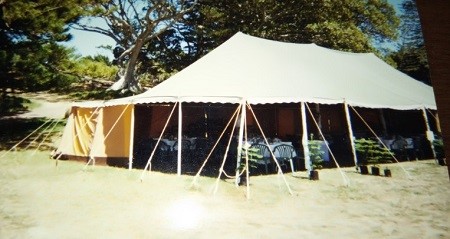
| 12 Sept 1984 to 2002 | Ronnie Harrison and Terry Gibbons | Kiosk destroyed by fire in 2002. |
From 1930 to 2005 the island was leased by the Department of Lands and Survey and by DoC as a concessionaire farm. During the period, apart from during WWII, the beaches of the island were able to be used by the public for recreation. The island was essentially a farm-park. Concessionaires would farm the island with a combination of cattle and sheep and a proportion of the profits would go to maintaining visitor facilities, such as fences and the wharf. In 1950, the 5,000 pound profit from the farm enabled the wharf to be extended.
— David Bade, 2009, Motuihe: a short introductory history
Ecology and Farming
During the 1970s and 1980s weeds and pests (rats, mice, rabbits and cats — fortunately not possums) became a problem. In the 1990s, Ronnie Harrison, who was the kiosk manager on the island from 1984 and who later farmed the island with her partner Terry Gibbons, discussed with DoC the possibility of restoring the forest on the island. DoC was sceptical as they felt it was too far gone with pests and weeds. The island was surveyed using the Macleans scale that measures rabbit infestations. On a scale of 1 to 10, the east end of the island was an 8. Rabbits were on every part of the island. Fullers sponsored an attempt to control the rabbits with Tree Pal; however it failed — the rabbits were so hungry they ate the Tree Pal.
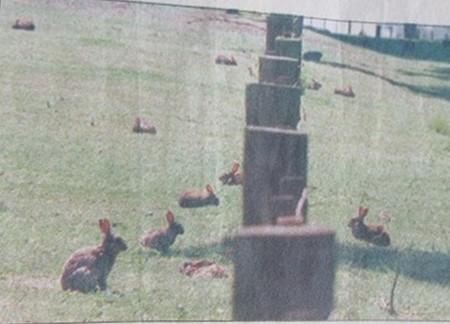
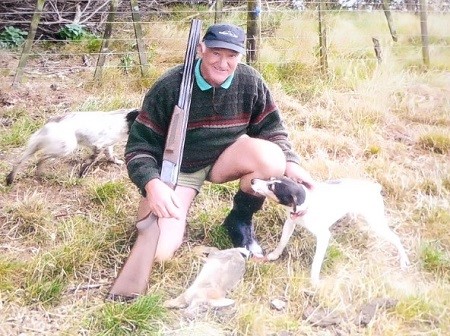
In 1993 and 1995 programmes had been carried out to remove the rats and mice. However the rabbits and cats remained. Ronnie made many applications to get help with the pests and was finally successful after forming the Motuihe Trust in 2000. It cost DoC hundreds of thousands of dollars but they found the money. Magtoxin and 1080 carrots were used. The island was closed for 3 months. There were a few rabbits left and Don Thompson, a trapper, was employed with his dog and he shot the last rabbit. Also 32 cats were destroyed. It was Don’s determination to get the last rabbit that made the eradication programme a success. The whole eradication programme took 18 months and the restoration project would not have worked without it. The island was declared pest free in late 2003/early 2004.
Fortunately, farmers over the years had fenced off three areas of native bush: Orchard bush, Von Luckner’s bush and Taraire bush. Although not huge areas, the mature trees that survived have provided the seeds for the cultivation of the trees used in the restoration project. Without the foresight of the farmers, the seed collection programme would not have been possible. The planting project began in 2003 and by 2020 nearly 450,000 trees had been planted. Tuatara, saddlebacks, kakariki, little spotted kiwi, bellbird, whitehead, and shore skink have been released, restoring the biodiversity of the island.
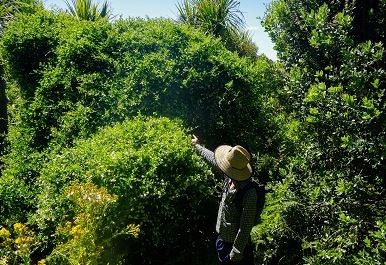
Weed control is a constant issue for the Motuihe Trust. Contractors are used to tackle the harder tasks like the cliffs (abseilers or helicopter) and gorse. Volunteers regularly tackle the woolly nightshade, mothplant, apple of sodom and rhamnus which was rampant when the Trust was set up. This is a job that will never go away as seeds blow over from Auckland.
Documents and Resources
- The Cotter Family — Shirley’s account of her visit to Motuihe in 1965
- Ronnie Harrison’s Memories — the full story of Ronnie’s experiences on Motuihe
- Ronnie’s Photo Gallery — gallery of photographs from Ronnie Harrison
- Rabbits as Told by Ronnie — Ronnie Harrison’s memories of rabbit control
- Species Translocations to Motuihe — record of species translocations to the island