
HMNZS Tamaki (1941–1963)
The Rock — New Zealand’s naval training base
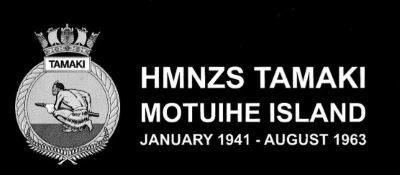
“The Rock” Reunion
On 14 February 2020 an event was held on Motuihe to remember all the men who served in the Navy on Motuihe. A large group of veterans (approximately 250) travelled to the island on a vehicular ferry which landed them on Ocean Beach. They took part in a ceremony to unveil two memorial plaques honouring the men who served on the island. The plaques are located at the site of the original flag pole which was at the centre of the navy base. The men affectionately called Motuihe Island “The Rock”.
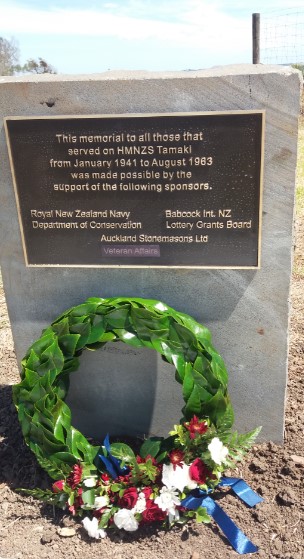
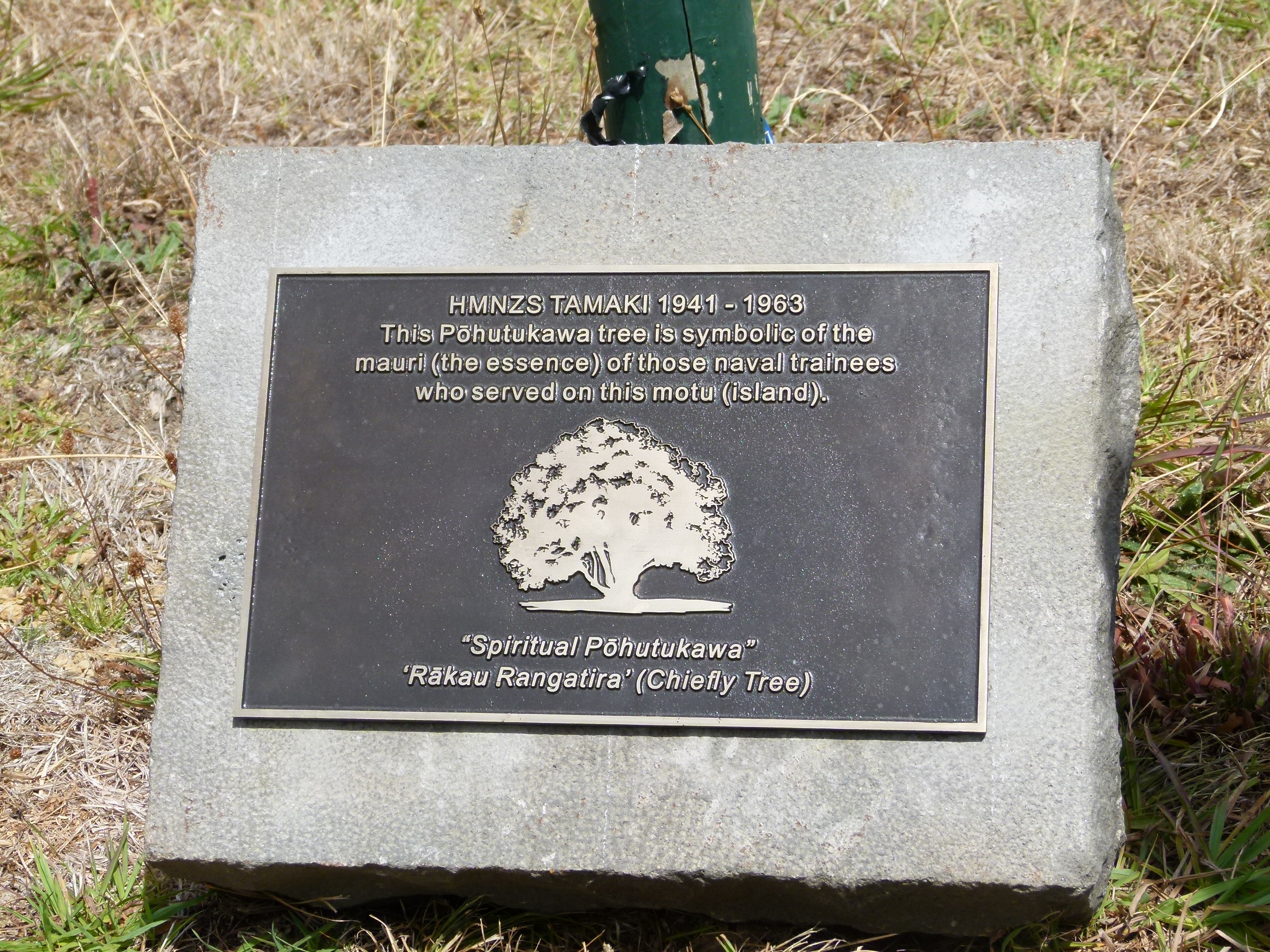
The two plaques commemorating the men who served in the Navy on Motuihe. The bottom plaque has a pōhutukawa tree in front of it planted as a living memorial.
Naval Period 1941–63
With the outbreak of World War II and the urgent need to train more naval personnel, the buildings at the north-west headland on Motuihe were converted into a navy training establishment during 1941, named HMNZS Tamaki.
Motuihe Island was considered an ideal site for a naval training establishment: it was close to Auckland, yet separate from its distractions, provided facilities, and had a beautiful physical setting.
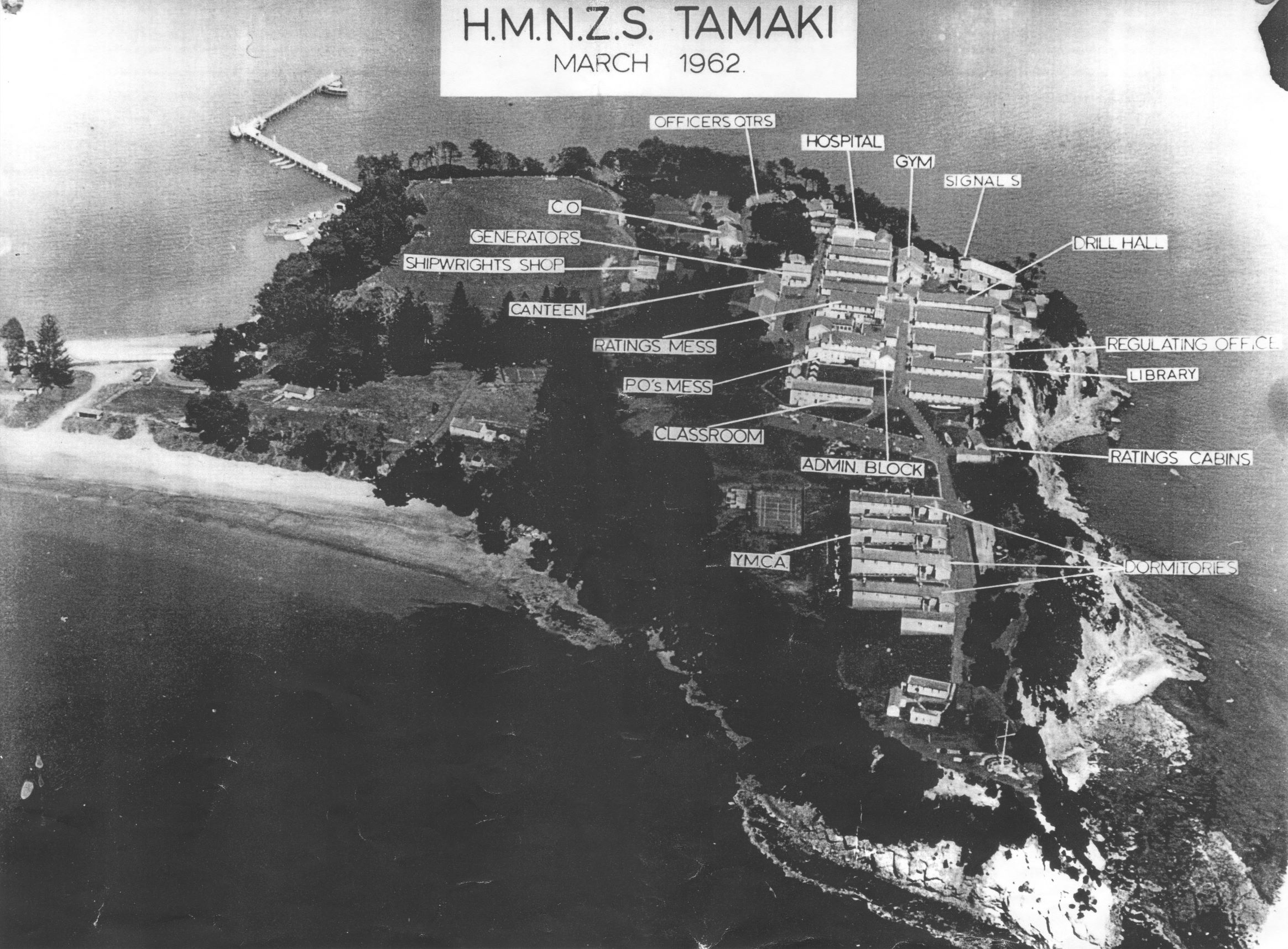
The twenty-two old quarantine buildings, which could accommodate 287 people, formed the nucleus of the facility. In order to accommodate more naval cadets, between 1941 and 1943, fifteen new buildings with a total floor area of 63,500 square feet were constructed including a provision store, a naval and clothing store, a canteen, a gymnasium and chapel, a school, a signal instruction building, a hospital, a dental clinic, and four large dormitories. Total accommodation was now 517.
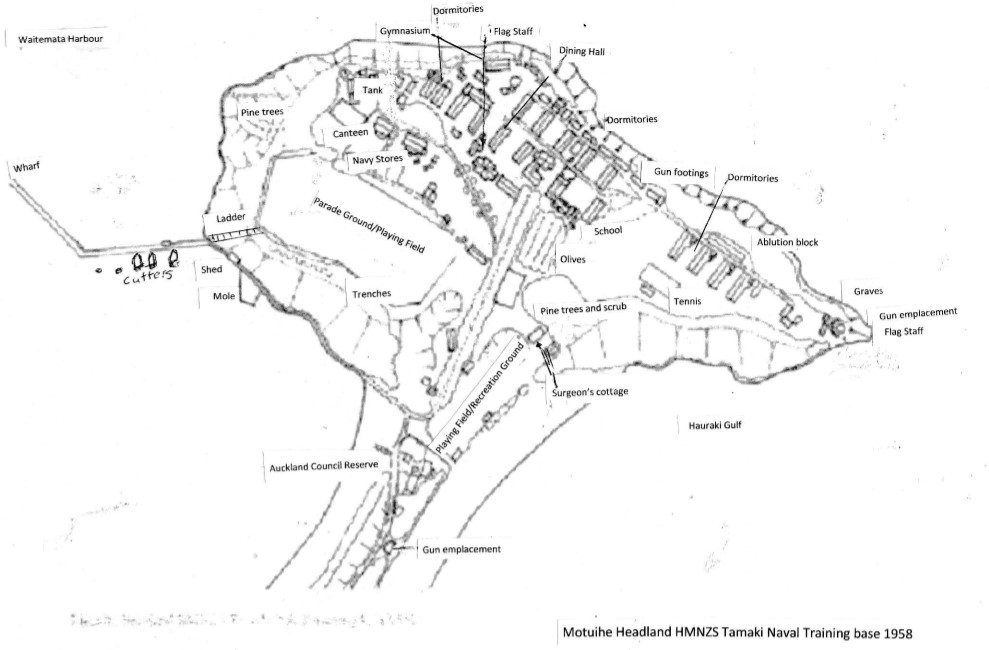
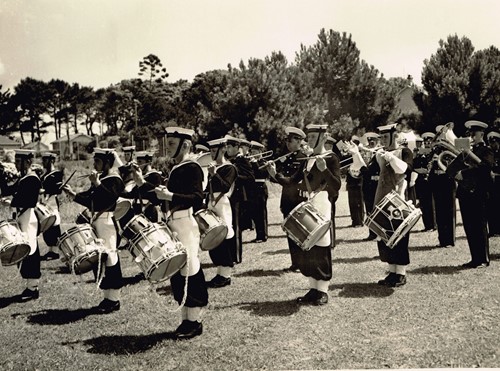
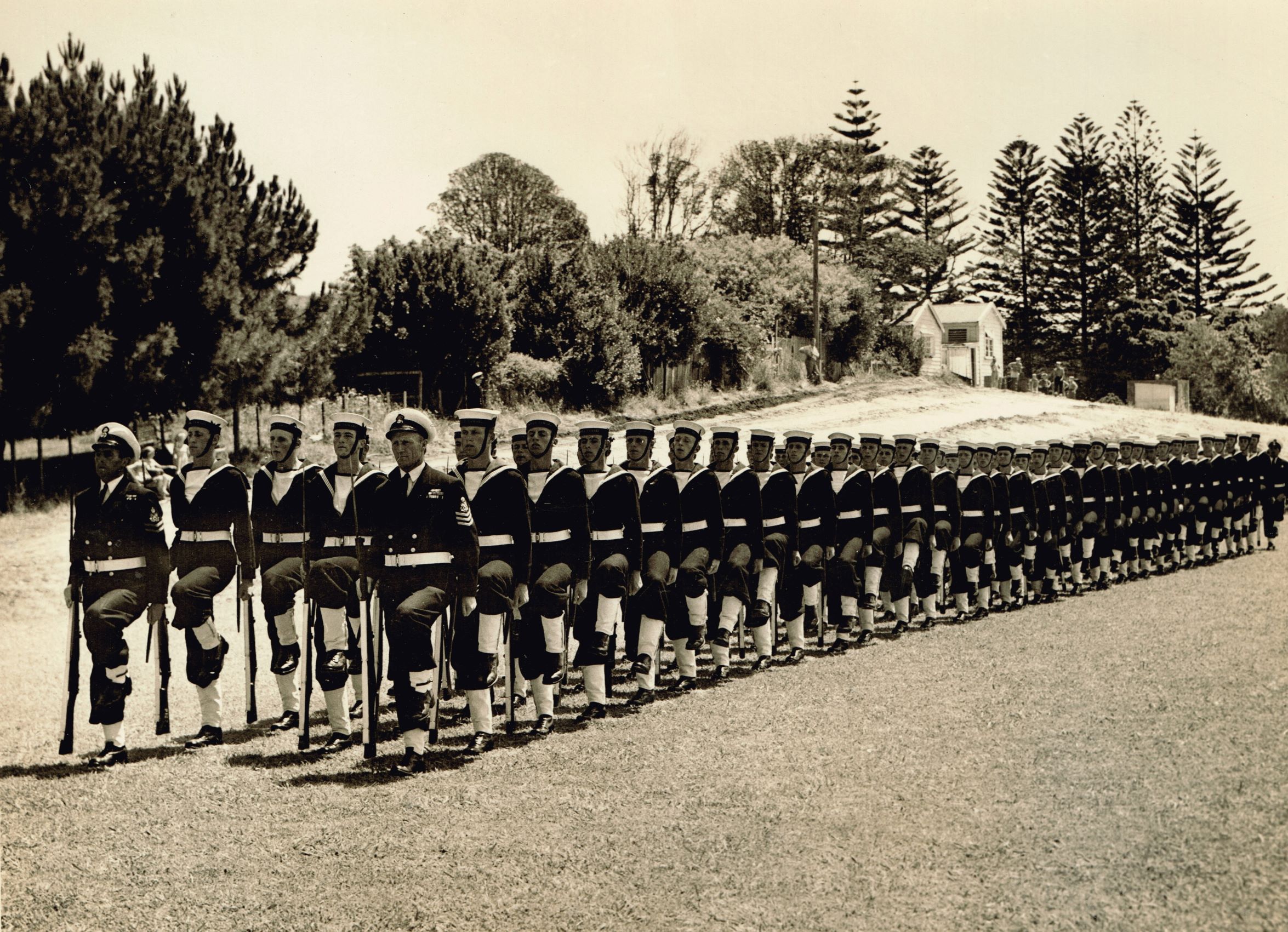
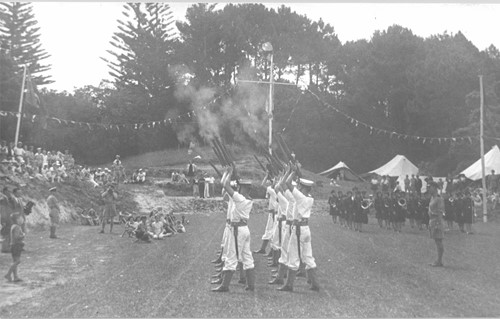
Life at HMNZS Tamaki
More than 6,000 recruits passed through Tamaki during the 22 years it operated, including many who served in World War II.
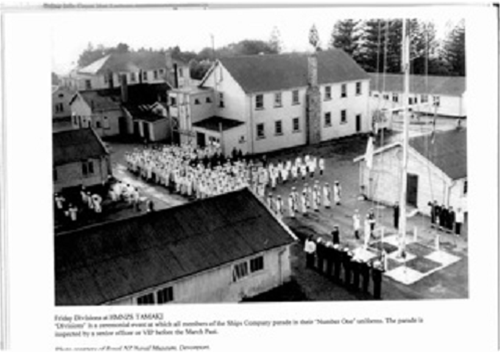
Cadets typically stayed here for their three months’ initial training after entering the Navy, during which time they were “broken in” to the Navy way of life. Among other things, they sailed whalers (large open boats), slept in hammocks and sometimes ate their food straight off the table – no plates. The fuel to run the base came from coal which was transported from the wharf using carts that ran on rails – still visible near the wharf.
The navy base continued in peacetime to be used for basic training in seamanship, fitness and discipline. In 1963 HMNZS Tamaki moved to the North Shore and the base reverted to Domain Board control.
Personal Accounts
- John Mills, Navy Cadet – shares his experience
- Jack Donnelly, Warrant Officer – shares his experience
- Des Townson, well-known Auckland yacht designer and sailor, was a cadet on Motuihe in 1953
- Peter Whitmore, one of the founding Motuihe Trustees (formed 2000), was a school sea cadet on Motuihe in 1961
After the Navy
When the Navy vacated in 1963, most of the approximately 70 buildings were demolished. Many were bulldozed over the cliff and remnants of cups and saucers could be found for many years on the rocks below. Some were also moved off the island. Les Chapman, a long-time resident of Rakino Island, confirms that the public buildings on the wharf at Rakino came from Motuihe in the 1960s. They have been extensively rebuilt. The cost of demolishing the water tower was considered too high so it was left standing. It could now be considered an historic feature, but its future remains in doubt given the danger it poses and the cost of preserving it. The concrete pads near the water tower are the site of the naval flagpole, shown on some of the photos.
Tony Slark – Last Naval Surgeon
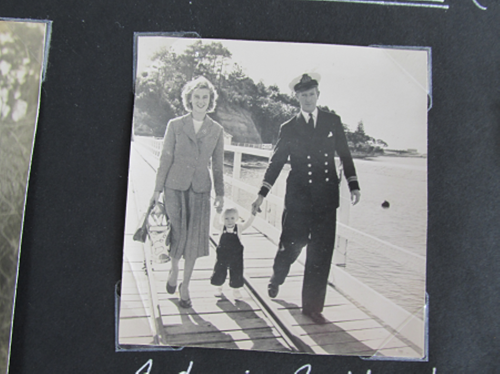
Tony Slark and his wife Eileen on Motuihe Wharf. Tony was the last Naval Surgeon and he and his family lived in the cottage. Tony was the first and only Patron of the Motuihe Trust. He became an expert in preventing the “bends” for divers.
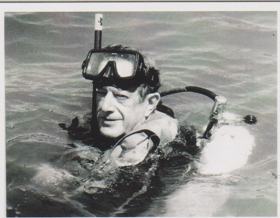
Interview with Eileen Slark available – see original document archive.
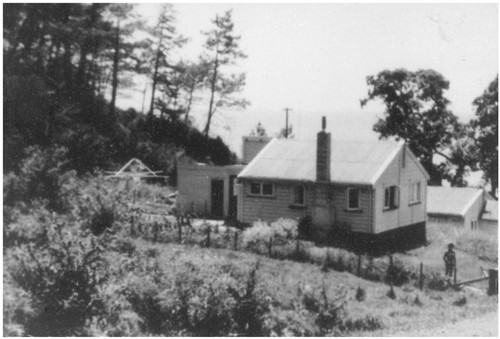
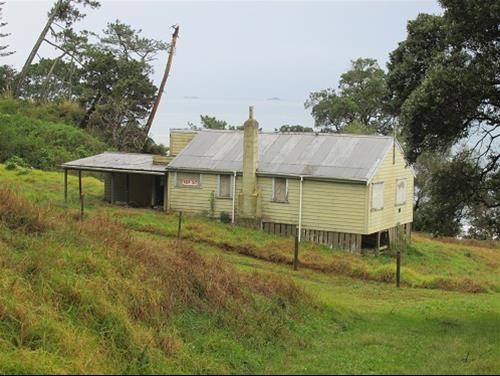
The Naval surgeon’s cottage when in use and now derelict.
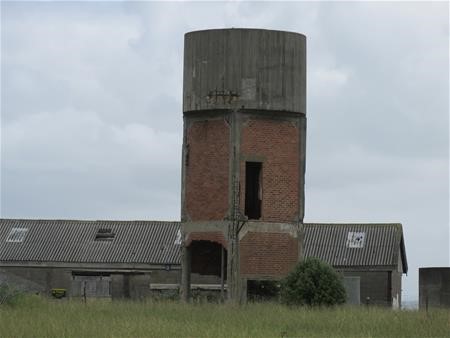
The water tower used to hold salt water for fire fighting, now derelict and in a dangerous condition.
Historical Documents
- Extracts from documents about the Navy moving on to Motuihe
- Extracts from documents about Motuihe reopening to the public after WWII
- Extracts from documents about the Navy leaving Motuihe
- Extracts from documents about the disposal of Navy buildings
Return to Farming 1963–2000
During the Navy period the larger portion of the island was farmed and maintained by sheep and fat cattle by farm manager Darryl Cotter on behalf of the Auckland City Council.
1968 – HMNZS Tamaki is gazetted a recreation reserve, and control of Motuihe passes to the Hauraki Gulf Maritime Park Board. The farmhouse and Top House date from this period. In 2016 the only buildings remaining from the Navy time are the derelict naval surgeon’s cottage and the water tower which is in a dangerous state.
Documents and Resources
- John Mills’ Memories — Navy cadet shares his experience on Motuihe
- A Survivor from the Rock — Warrant Officer Jack Donnelly’s experience
- Des Townson’s Experience — Auckland yacht designer and sailor, cadet on Motuihe in 1953
- Peter Whitmore’s Cadet Experience — founding trustee and school sea cadet on Motuihe in 1961
- Interview with Eileen Slark — wife of the last naval surgeon, Tony Slark
- The Navy Moves to Motuihe — extracts from documents about the Navy moving onto Motuihe
- Motuihe Reopens After the War — extracts from documents about Motuihe reopening to the public
- Navy Leaves Motuihe — extracts from documents about the Navy leaving Motuihe
- Disposal of Navy Buildings — extracts from documents about the disposal of Navy buildings