
The Island
The Island
Location
Motuihe Island / Te Motu-a-Ihenga
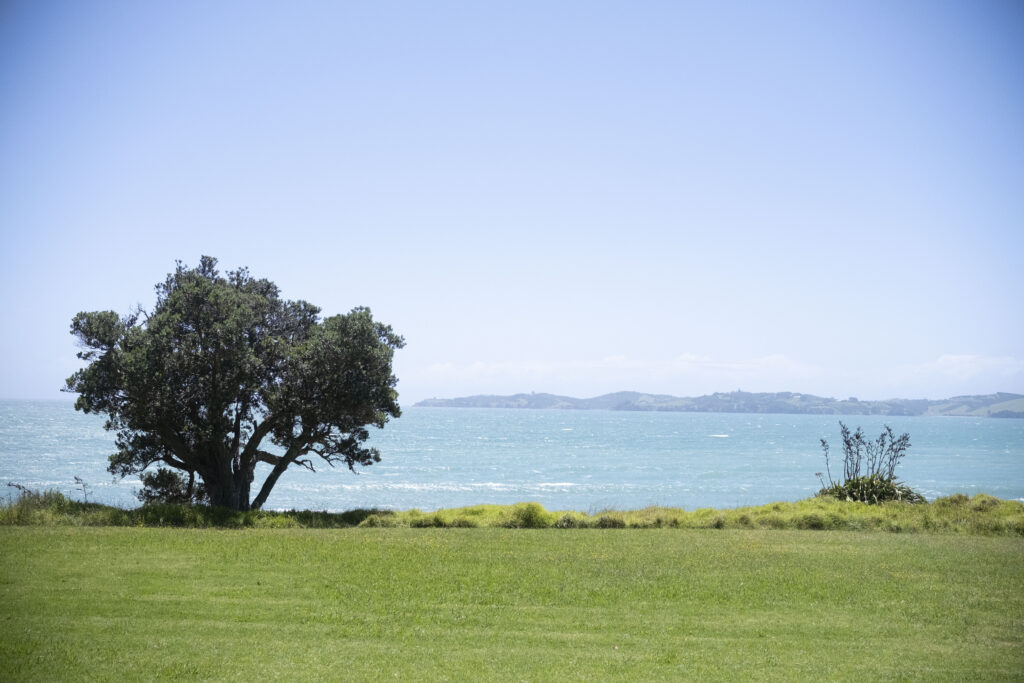
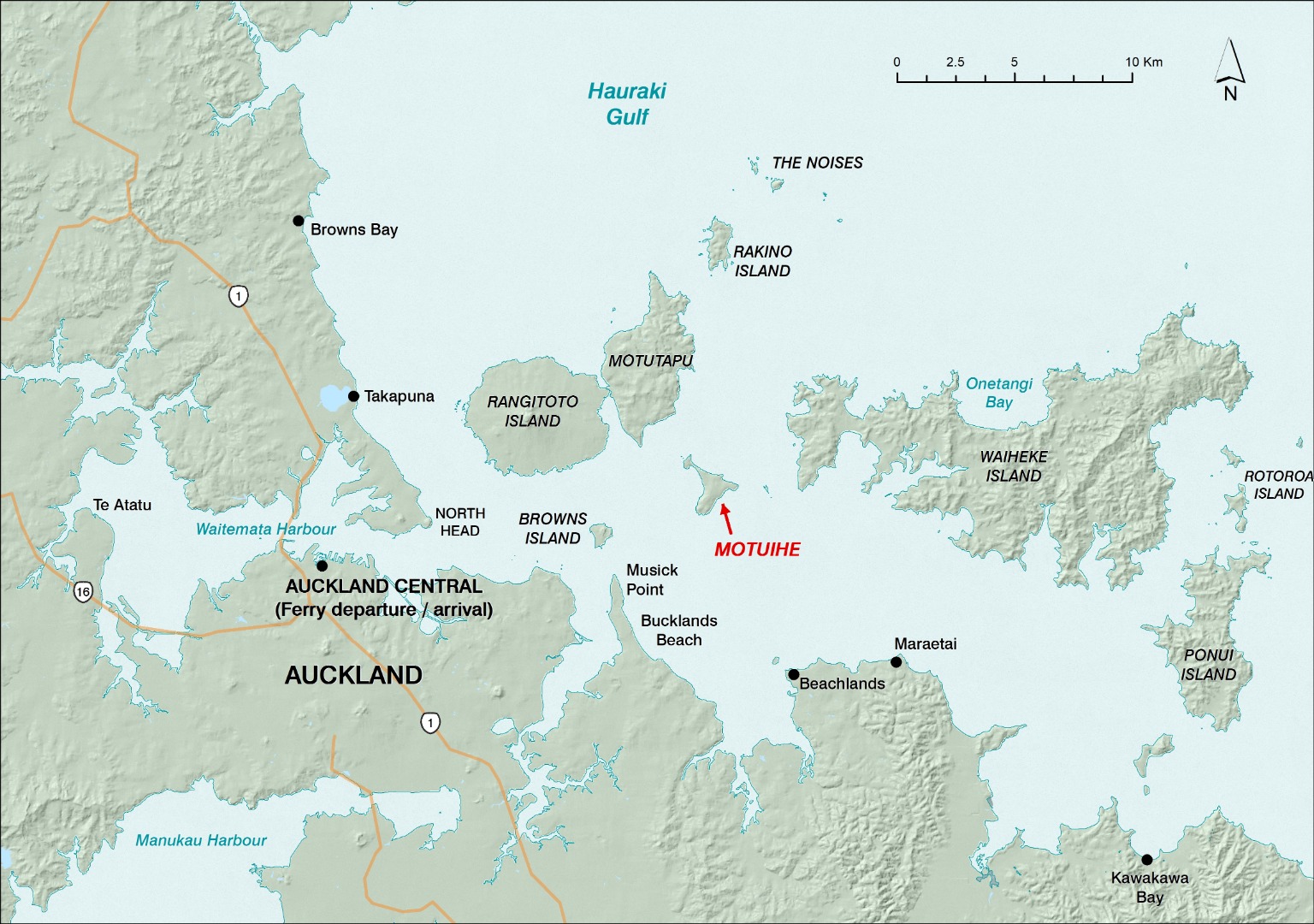
A recreational reserve situated in the inner Hauraki Gulf 17 km from downtown Auckland. It is located between Waiheke Island and Motutapu Island. By a direct fast ferry the journey would be 30 minutes, however, the ferries usually take closer to one hour due to pick-ups or drop-offs of passengers at Devonport and Rangitoto. The island covers 179 hectares and is one of the smallest occupied islands in the Gulf. Motuihe is administered by the Department of Conservation and the Motuihe Trust volunteers are currently restoring the native flora and fauna.
Māori History
Te Motu-a-Ihenga connects to centuries of Māori settlement. Archaeological sites reflect its long history of occupation.
European History
Quarantine station, military camp during both World Wars (including Count Felix von Luckner’s escape), and later a farming property until 2005.
Geology
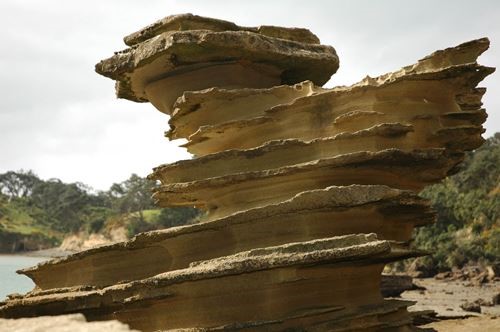
Motuihe’s basement is hard old greywacke formed in the Jurassic era about 200 million years ago. Overlying this are sedimentary rocks formed 15-20 million years ago in the Miocene era. Mostly they consist of sandstones and mudstones formed from weathered particles washed off the land. At the base of these deposits there is much coarser debris made up of cobbles, pebbles and grit. Often it has fossilised fragments of clams, oysters, lampshells, barnacles and sea urchins, showing that this mixed debris deposited in shallow water was mainly the product of shoreline erosion. The original layered deposits of sand and mud became rock by the processes of compression and by cementation, with fragments of chalk (mostly from crushed animal shells) becoming mixed with the deposits. Along the south-west shore of the island the shell deposits are so concentrated that they have formed granular limestone.
Some parts of Motuihe have deposits known as Parnell grit. This consists of volcanic debris from the Waitakere volcano that ran down underwater slopes as a lahar and settled out in isolated sites of the ancient sunken Waitemata basin. The Parnell grit on Motuihe consists of pebbles and boulders of hard andesite rock (solidified lava) in a concreted agglomerate of coarse sand and grit.
Motuihe soils are known as Brookby loam and clay and Marua clay loam.
The Restoration
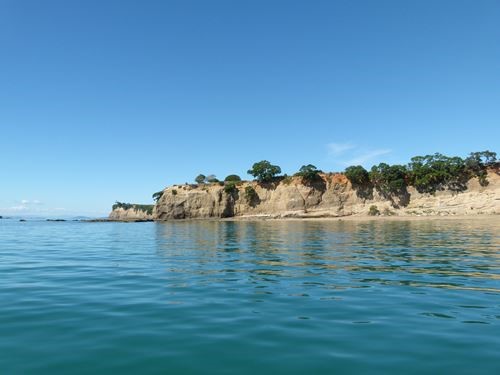
Since 2000, transformed from farmland to predator-free native bush sanctuary. A model for community-led conservation.
Come and see for yourself
Walk the tracks, explore the beaches, and discover the island’s heritage.